
Giant tortoises at Chamarel, what the ticket includes
The giant tortoise enclosure is included in the Chamarel 7 Coloured Earth Geopark ticket, alongside the coloured-earth and Chamarel Waterfall viewpoints. You do not need an extra ticket to view the tortoises. These are Aldabra giant tortoises from the Seychelles, not surviving native Mauritian tortoises. This is an enclosure-viewing stop, not a feeding or animal-handling activity, and children must be supervised.
Read the guide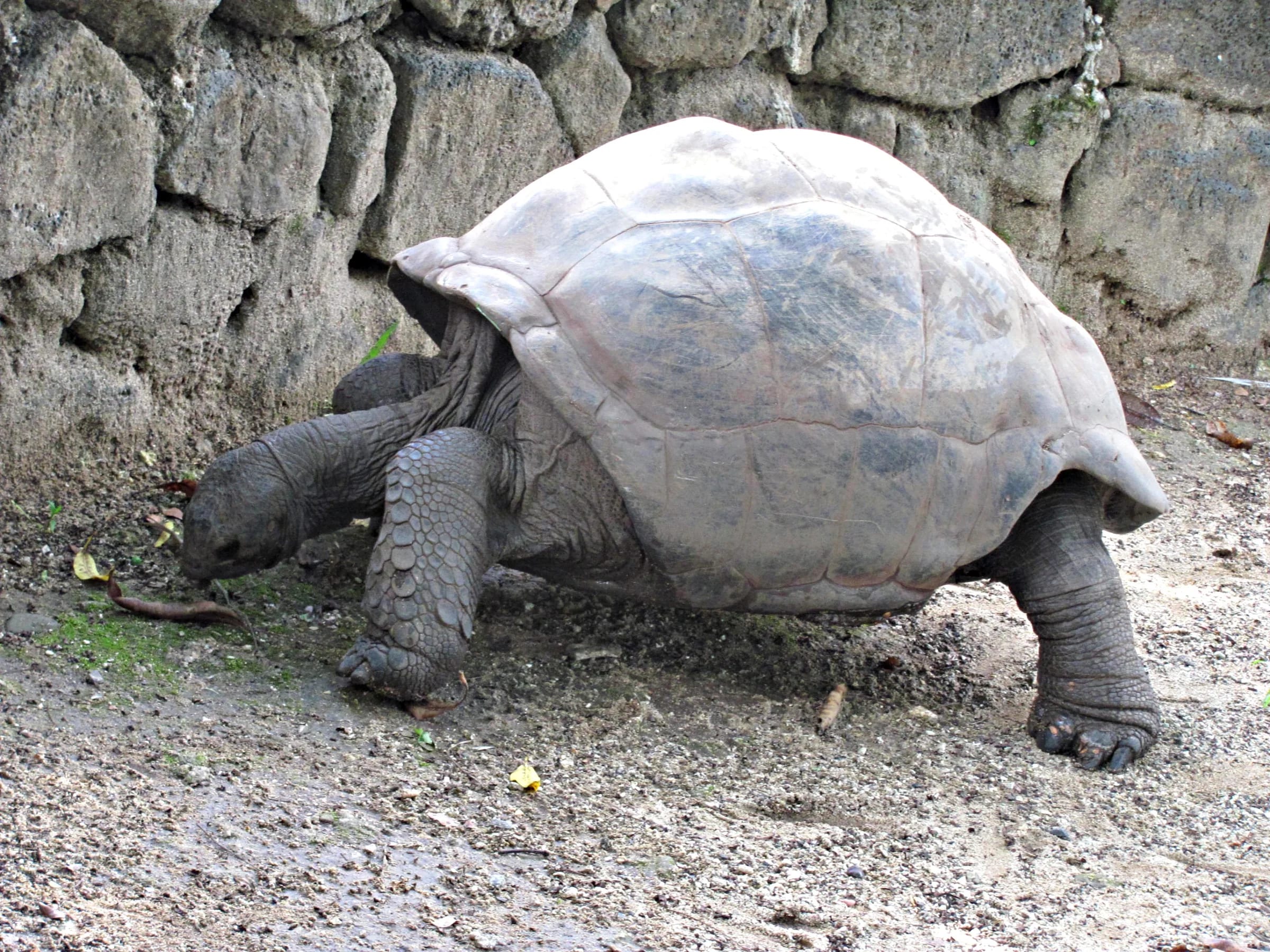
One ticket covers the enclosure and viewpoints
Plan the tortoises as part of your geopark visit rather than as a separately ticketed encounter. The same admission covers viewing the coloured earth and the waterfall, so a member of your group who is mainly interested in the animals can share the visit with someone coming for the landscape.
The distinction between viewing and interacting matters when choosing this stop. Inclusion in the ticket means you can watch the enclosure’s inhabitants. It does not mean you can enter their space, feed them or arrange a hands-on encounter.
Which giant tortoises live at Chamarel?
The geopark identifies its animals as Aldabra giant tortoises, a species originating in the Seychelles. Mauritius once had its own native tortoises, but those are extinct. Seeing giant tortoises on Mauritius today therefore does not mean you are looking at survivors of Mauritius’s original tortoise species.
For children, explain the difference through place rather than size. These animals live at Chamarel, but their species comes from another Indian Ocean island group. That is a useful distinction to carry into other wildlife visits, where an animal’s location and its native range may also differ.
Watch from outside the enclosure
The geopark’s rules keep visitors outside the tortoise enclosure and require a respectful distance. Do not feed, ride, lift or otherwise handle the animals. Keep the visit focused on observation, even if a tortoise comes near the edge of its enclosure.
Leave food put away rather than offering a snack or holding it out for a photograph. The no-feeding rule applies to visitors generally, not just to children. For photographs, use the view available from the visitor area instead of reaching towards an animal or trying to make it move into a different position.
Set expectations before children arrive
Tell children beforehand that they will be watching tortoises, not petting or feeding them. An adult should remain with them at the enclosure, rather than leaving them to watch while the rest of the group moves on. Explain that the boundary is there to separate visitors from the animals.
Give younger visitors something to notice without asking the tortoises to perform. They can look at shell shapes, compare the animals they can see or describe how a tortoise moves if one is walking. Avoid promising activity, contact or a particular animal before the visit.
Fit the tortoises into the geopark visit
The geopark gives an overall visit range of 45 minutes to two hours for the waterfall viewpoints, coloured earth and tortoises. That is a whole-site allowance, not a stated duration for the enclosure alone. Leave some flexibility if watching the animals is a priority for your group.
There is no need to turn the enclosure into a timed activity. Pause while your group is interested, then continue to the landscape viewpoints. If travelling with children, avoid using the tortoises as a promised reward involving feeding or touching, since neither belongs in this visit.
Choose it for observation, not a wildlife safari
The enclosure suits visitors who want to include giant tortoises within an existing Seven Coloured Earth outing. It is different from searching for free-ranging wildlife in the forests around Chamarel, and should not be described as seeing native Mauritian tortoises in the wild.
Size alone does not tell you how old a tortoise is. Focus on the animals’ Seychelles origin and the difference between Aldabra giant tortoises and Mauritius’s extinct native species, rather than attaching an assumed age to a large individual.
Questions people ask
Do I pay extra to see the giant tortoises at Chamarel?
No. Viewing the tortoise enclosure is included in the Chamarel 7 Coloured Earth Geopark ticket, together with the coloured-earth and waterfall viewpoints.
Are the Chamarel tortoises native to Mauritius?
No. They are Aldabra giant tortoises from the Seychelles. Mauritius’s native tortoises are extinct, so these are not survivors of those species.
Can children feed or ride the tortoises?
No. Visitors must not feed, ride or handle the tortoises. Children must be supervised and watch from outside the enclosure.
How long should I allow for the tortoises and coloured earth?
The geopark suggests 45 minutes to two hours for the whole visit, including the waterfall viewpoints. It does not give a separate viewing duration for the tortoise enclosure.