
Chamarel coffee and the plantation tour
Chamarel coffee is an Arabica grown at about 280 m on the Chamarel 7 Coloured Earth Geopark estate, and its plantation tour costs Rs 1,000 for non-resident adults and Rs 650 for resident adults, leaving every day at 09:00, 11:00, 13:00 and 15:00 (checked on 29 October 2026). Coffee first reached Mauritius in 1715, and the Chamarel plantation dates from the 1960s, 1961 for the estate takeover and 1967 for the first planting.
Read the guide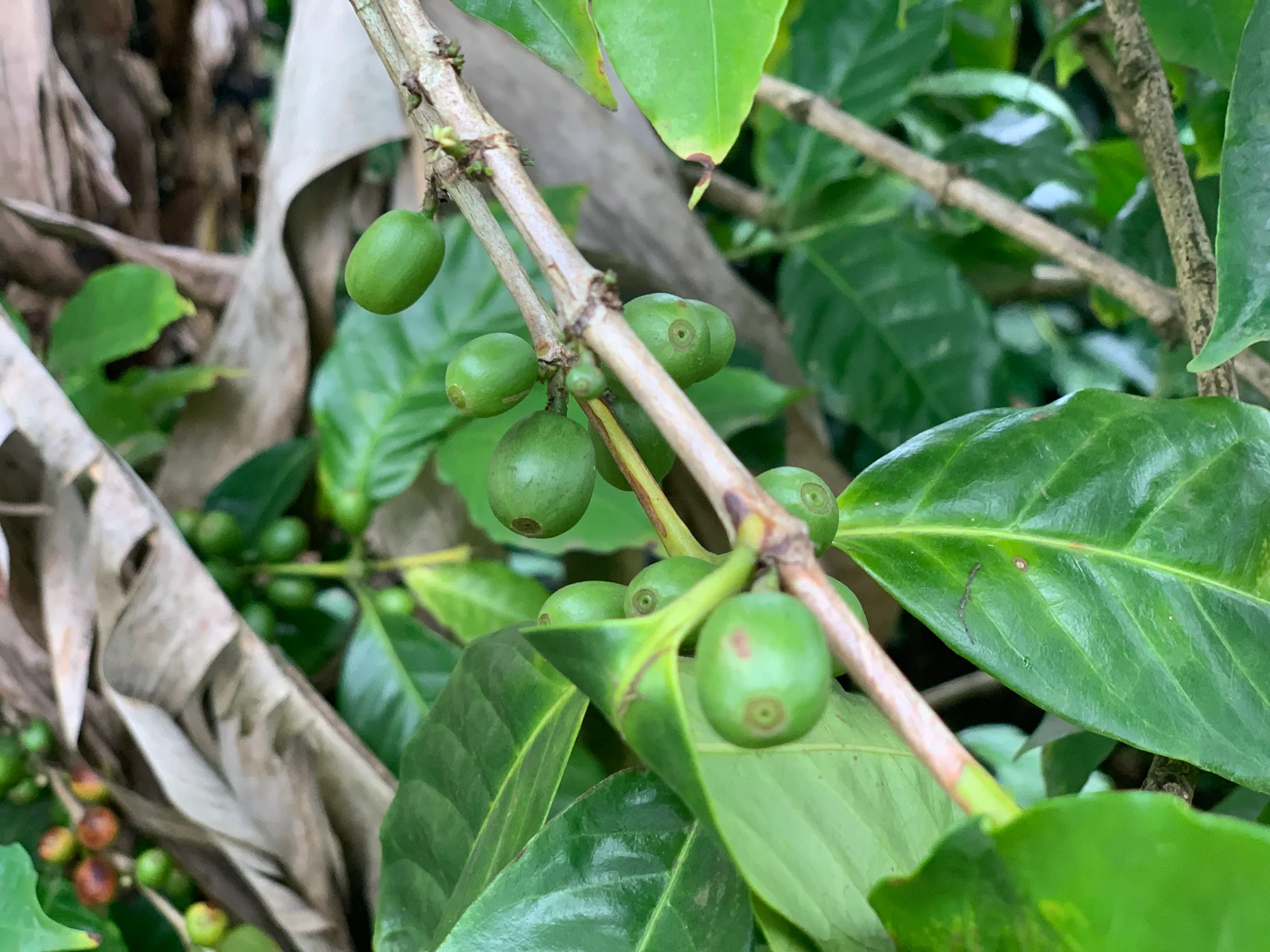
What Chamarel coffee is
Chamarel coffee, sold as Café de Chamarel, is an Arabica coffee grown at about 280 m above sea level on the estate of the Chamarel 7 Coloured Earth Geopark, which calls it the only coffee plantation in Mauritius.
The main variety is Arabica K7, originally from Kenya and usually grown above 1,000 m elsewhere. The geopark calls the coffee pure Arabica, and the other published account, from November 2025, puts about 2% of the crop as Liberica, a different species.
The plantation lies near the coloured earth at Les Rouleaux, and the beans are processed down the hill at Case Noyale rather than on the plantation.
Did coffee return to Chamarel in 1961 or 1967?
Coffee came back to Chamarel in two steps. The Bel Ombre Sugar Company took over the Chamarel and Case Noyale estates in 1961, and the first Arabica trees went in on a larger scale in 1967, so the two dates in the record, 1961 and 1967, each mark one of those steps.
The geopark’s own history, published in June 2026, dates the first planting to March 1967, after Oswald du Chasteleer, a coffee specialist from the former Belgian Congo, joined the project in 1966, and gives 1970 for the first harvest. A drying and roasting plant opened at Case Noyale in 1967.
Coffee itself reached Mauritius much earlier. The first plants arrived in 1715 under the French East India Company, a Mocha variety brought in by Guillaume Dufresne.
How big the plantation is and how the coffee is made
The published figures for the size of the Chamarel coffee plantation are 12 ha and 16 ha, and the geopark gives no plantation area of its own, only a wider estate of 161 ha.
The two crop figures in the table measure different things, cherries picked against coffee produced, so they do not contradict each other. About 30 seasonal workers pick the cherries by hand, and more than 25 people work on the processing.
After picking, the beans are pulped, fermented in water for at least 24 hours, washed and dried at Case Noyale for two to three weeks, then roasted there at 200 °C for about twenty minutes.
| Figure | Value | Note |
|---|---|---|
| Altitude | About 280 m | The geopark’s figure |
| Plantation area | 12 ha or 16 ha | Two published figures; the geopark gives none |
| Yearly crop | About 40 t of cherries, or 3 to 5 t of coffee | Cherries picked against coffee produced |
| Harvest | May to July, or May to September | The geopark’s tour page and its June 2026 history |
| Variety | Arabica K7, with about 2% Liberica in one account | Pure Arabica in the geopark’s own description |
The coffee tour at the geopark, prices and times
The Chamarel Coffee Plantation Experience costs Rs 1,000 for non-resident adults and Rs 650 for resident adults, and leaves every day at 09:00, 11:00, 13:00 and 15:00 (checked on 29 October 2026).
The tour lasts up to 80 minutes, a guided walk of 45 to 60 minutes followed by a cupping session of 15 to 20 minutes, mainly in English and French. It runs in rain or shine, is not suitable for children under 5, wheelchairs or pushchairs, and five parking spaces are kept for tour guests.
Book ahead by email to coffeetour@7colouredearth.mu, by phone on +230 5728 8685 or +230 451 8500, or online, and walk-ins at the Welcome Center are taken when there is space. The published terms do not say which ages count as children or whether the tour includes geopark entry, so ask when you book. A Rs 750, 90-minute version of the tour still circulates online; the official price is Rs 1,000 and the official length up to 80 minutes.
| Ticket | Non-resident | Mauritian resident |
|---|---|---|
| Adult | Rs 1,000 | Rs 650 |
| Child | Rs 500 | Rs 325 |
Where to taste or buy Chamarel coffee
The surest places to taste and buy Chamarel coffee are on the plantation itself, at the tour’s cupping session and at the Coffee Plantation Boutique, which sells freshly roasted Café de Chamarel beans (as published in October 2026).
The geopark’s coffee shop opens every day from 09:30 to 17:00 for snacks and light lunches, but it is inside the paid area, so you need an entrance ticket, and which coffee it serves is not stated. On Thursdays and Saturdays, Le Chamarel Restaurant’s Les Terres de Chamarel lunch is built on regional products, coffee among them (as published in October 2026).
No other outlet for Chamarel coffee, in supermarkets or at the airport, is published (checked on 29 October 2026), so buy it on the hill if you want some to take home. The Rhumerie de Chamarel’s coffee liqueur is a different product, made with roasted Robusta and Arabica beans of unstated origin.
Questions people ask
How much is the Chamarel coffee tour?
The Chamarel coffee tour costs Rs 1,000 for non-resident adults and Rs 500 for non-resident children, and Rs 650 and Rs 325 for Mauritian residents (checked on 29 October 2026). Tours leave every day at 09:00, 11:00, 13:00 and 15:00 and last up to 80 minutes, including a cupping session. Book by email at coffeetour@7colouredearth.mu or call +230 5728 8685.
Is Chamarel the only coffee plantation in Mauritius?
On the geopark’s own account, yes. The Chamarel 7 Coloured Earth Geopark describes its plantation as the only coffee plantation in Mauritius, and its June 2026 history calls Chamarel coffee the only coffee cultivated in the country. No independent survey confirms or contradicts that. Coffee has grown in Mauritius since 1715, when the first plants arrived.
When was coffee planted in Chamarel?
Coffee came back to Chamarel after the Bel Ombre Sugar Company took over the Chamarel and Case Noyale estates in 1961. The geopark dates the first Arabica planting to March 1967 and the first harvest to 1970, and 1967 is also the year of the larger-scale restart. The two dates in the record are 1961 for the takeover and 1967 for the planting.
Where can I buy Chamarel coffee?
Chamarel coffee is sold as freshly roasted beans at the Coffee Plantation Boutique on the Chamarel 7 Coloured Earth Geopark estate, and you taste it during the plantation tour’s cupping session. No other retailer, in supermarkets or at the airport, is published (checked on 29 October 2026), so buy on the hill if you want some to take home.
When is the coffee harvest in Chamarel?
Chamarel coffee is picked by hand from May. The geopark gives two harvest windows, May to July on its tour page, with about 30 seasonal pickers, and May to September in its June 2026 history. Either way, a visit between May and July is the most likely time to see ripe cherries on the trees and the picking under way.
Does the coffee tour include the Seven Coloured Earth?
The published tour terms do not say whether the plantation tour includes entry to the Chamarel 7 Coloured Earth Geopark, which costs Rs 800 for non-resident adults on its own (checked on 29 October 2026). The coffee shop and souvenir shop sit inside the paid geopark, so ask when you book what your ticket covers.
Pair it with the coloured earth
The coffee plantation is on the same estate as the Seven Coloured Earth, so the geopark guide is the natural next read.